Flowers
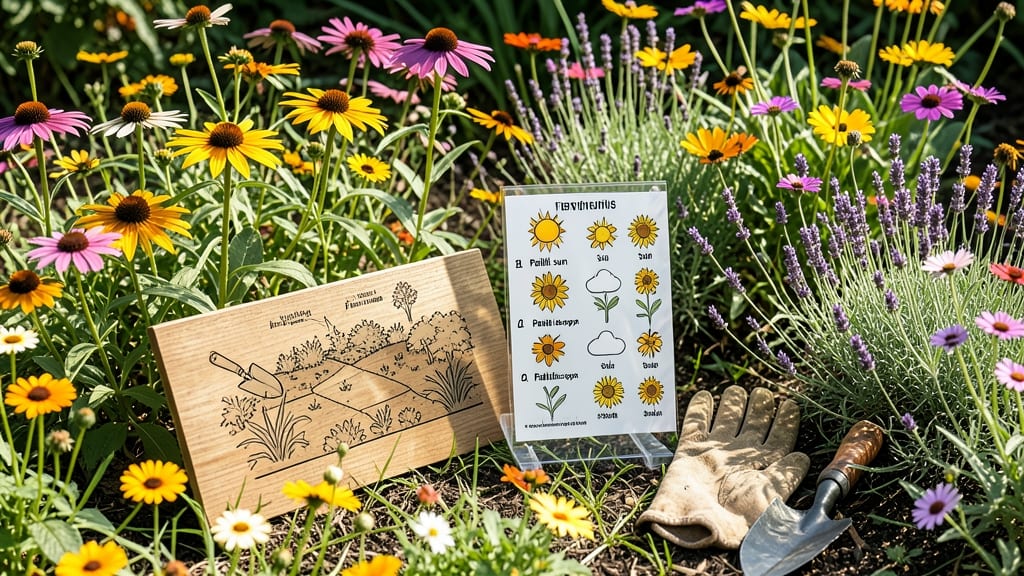
How much sun do wildflowers need? They require at least 3 to 6 hours of sunlight daily to thrive, but the exact amount depends on the species and your climate.
Picture this: you’ve spent hours scattering seeds, dreaming of a meadow bursting with color—only to watch your wildflowers wilt or fail to bloom because they’re getting the wrong amount of sun. Too little, and they stretch weakly; too much, and they crisp at the edges.
Some wildflowers, like Black-Eyed Susans and Coneflowers, crave full sun (6+ hours), while others, such as Lupines and Columbines, do better with partial shade (3–4 hours). Even within the same garden, microclimates can shift what works.
Below, I’ll break down the sunlight needs for 12+ wildflower varieties, how to adjust for your region, and the telltale signs your plants are begging for more (or less) light.

Wildflower sunlight requirements by type: full sun vs. partial shade needs
Wildflowers are incredibly resilient, but their sunlight needs vary dramatically by species. Some thrive in full sun, while others prefer partial shade to avoid scorching. Getting this right means the difference between a vibrant meadow and struggling seedlings.
Let’s break down the exact sunlight hours each popular wildflower needs to bloom beautifully.
Most wildflowers fall into three categories: full-sun lovers (6+ hours), partial-shade adaptors (3-5 hours), and low-light tolerators (under 3 hours). Your garden’s microclimate—like afternoon shade from trees or reflective surfaces—can shift these needs. For example, Black-Eyed Susans in the Southwest may need morning sun only to prevent wilting.
| Wildflower | Sunlight Needs | Hardiness Zones | Seasonal Adjustments |
|---|---|---|---|
| Black-Eyed Susan (Rudbeckia hirta) | 6+ hours full sun | 3-9 | Reduce to 4-5 hours in Zones 9-11 |
| Coneflower (Echinacea) | 5-6 hours full sun | 4-8 | Tolerates 3 hours in partial shade |
| Lupine (Lupinus) | 3-4 hours partial shade | 3-10 | Avoid midday sun in hot climates |
| Goldenrod (Solidago) | 4-6 hours full sun | 3-9 | Drought-tolerant; reduce water, not sun |
| Columbine (Aquilegia) | 2-3 hours partial shade | 3-8 | Morning sun only in Zones 7+ |
| Bee Balm (Monarda) | 5-6 hours full sun | 4-9 | Prune for 3 hours in high heat |
| Yarrow (Achillea) | 6+ hours full sun | 3-10 | Deadhead to encourage more blooms |
| Coreopsis (Tickseed) | 6-8 hours full sun | 4-10 | Self-seeds; thin seedlings for space |
If you’re in USDA Zones 9-11, afternoon sun can be brutal. I’ve seen Black-Eyed Susans wilt dramatically when exposed to 6+ hours of midday sun without proper hydration.
Instead, place them where they get morning sun and afternoon shade—like near a fence or under a deciduous tree that hasn’t leafed out yet.
For northern climates (Zones 3-5), wildflowers like Lupines and Columbine actually prefer partial shade
How to adjust sunlight for wildflowers in different climates
Adjusting sunlight for wildflowers isn’t just about planting them in the sunniest spot—it’s about understanding how your local climate affects their needs. In the Southwest U.S., intense UV rays can scorch delicate petals, while humid Southeastern regions may require afternoon shade to prevent fungal growth.
Even in Northern climates, short growing seasons demand strategic placement to maximize light exposure.
My garden in Zone 7b taught me that wildflowers like Black-Eyed Susans (which love full sun) can still thrive with afternoon shade in summer, while Columbines (partial shade lovers) may bolt in the heat if planted too exposed.
The key is observation and flexibility—your microclimate might differ from the general rulebook.
Before making adjustments, test your garden’s sunlight for at least a week. Place a white board or app (like SunCalc) in potential planting spots to track direct vs. dappled light.
Wildflowers in containers are easier to move, while in-ground plants may need shade cloths or mulching to regulate temperature.
⚠️ CALLOUT WARNING⚠️ Sunlight Shock Kills Wildflowers Fast!
Too much sun causes leaf scorch (brown, crispy edges) within days, while too little leads to leggy, weak stems that flop over. Transition plants gradually—move containers to 50% shade for 3 days before full shade. For in-ground plants, use 30-50% shade cloth to ease them into lower light.
Pro Tip: Morning sun is gentler than afternoon heat. In Zone 8+, plant sun-lovers on east-facing beds to avoid midday intensity.
For high-humidity climates (like Florida or Louisiana), focus on afternoon shade to prevent fungal diseases. Tall grasses like Little Bluestem can handle full sun, but Delicate Blue Vervain may need protection. Use lightweight shade cloths (30-40%) and improve airflow by spacing plants 12–18 inches apart.
In Northern climates (e.g., Minnesota or Maine), extend the growing season by planting early-blooming wildflowers (like Sweet Alyssum) in south-facing beds where they’ll catch reflected light from fences or walls. Add reflective mulch (like white gravel) to bounce extra light onto shorter plants.
Companion planting is another trick. Pair tall sun-lovers (e.g., Joe Pye Weed) with shade-tolerant ground covers (e.g., Creeping Phlox) to create a natural light gradient. This mimics a wild meadow’s layered sunlight and keeps all plants happy without drastic adjustments.
Remember: Mulch isn’t just for weeds. A 2–3 inch layer of straw or wood chips keeps soil cool and moist, reducing the need for extreme shade. In desert climates, mulch also prevents soil from overheating, which can stunt root growth.
Test your mulch’s effect by placing a soil thermometer at planting depth—ideal temps hover around 60–75°F.