
Light Requirements
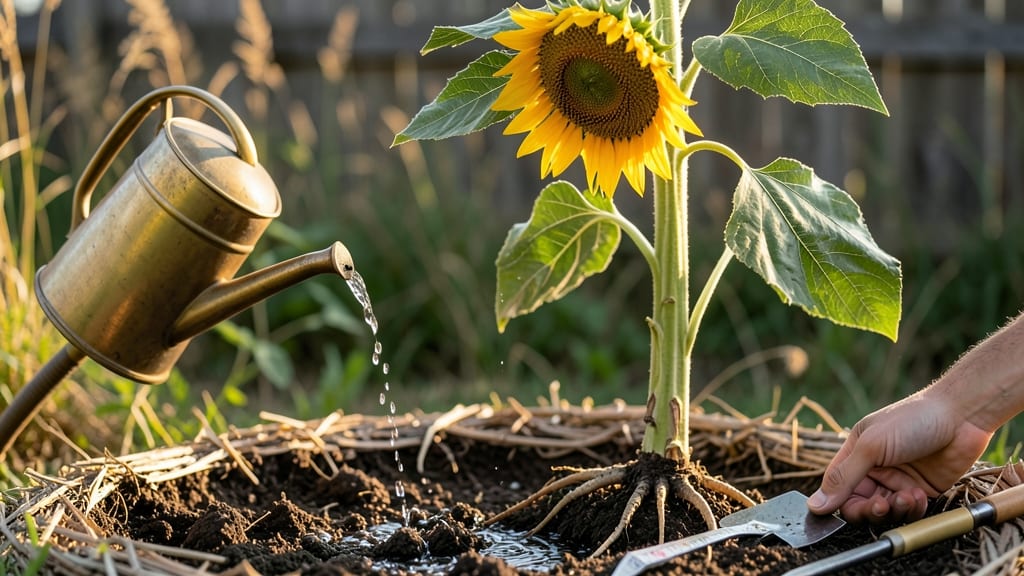
To water sunflowers properly, aim for 1-2 gallons per plant every 3-5 days—deep soaks that encourage strong root growth and towering stalks 🌻.
If you’ve ever watched your sunflowers droop midday or struggle to reach their full height, it’s usually a watering issue. Too little, and they’ll wilt; too much, and their roots suffocate. The key is consistency—especially during their rapid spring growth.
Here’s what you need to know: soil type, temperature, and growth stage all change how much water your sunflowers need. Sandy soil drains fast, while clay holds moisture longer. And once those 10-foot stalks start flowering, they’ll drink even more.
I’ll break down the exact schedule by stage—from seedlings to seed heads—plus how to spot when your plants are thirsty (or drowning) so you can adjust before it’s too late.
Sunflower watering schedule by growth stage: from seed to bloom
Sunflowers thrive when their watering routine matches their growth stage. Overwatering can drown delicate roots, while underwatering stunts their towering potential. The key is consistent moisture without soggy soil. Let’s break down the perfect watering schedule from seed to bloom, including adjustments for drought-prone climates.
Young sunflower seedlings need daily moisture to establish roots, but mature plants can handle brief dry spells. The trick is deep watering—soaking the soil 6-8 inches deep—rather than light, frequent sprinkles. This encourages roots to grow downward, making sunflowers more resilient during dry spells.
Here’s your stage-by-stage watering guide, including soil moisture targets and frequency adjustments for hot, dry conditions. Use this as your cheat sheet to keep your sunflowers thriving all season.
| Growth Stage | Watering Frequency | Soil Moisture Target | Water Amount | Drought Adjustments |
|---|---|---|---|---|
| Germination (0-7 days) | Daily (keep soil damp) | 1-2 inches deep, moist | ¼ cup per seedling | Use humidity dome or mist |
| Seedling (7-30 days) | Every 2-3 days | 2-3 inches deep, consistently moist | ½ gallon per plant | Water early morning only |
| Vegetative (30-60 days) | Every 3-5 days | 4-6 inches deep, evenly moist | 1-2 gallons per plant | Deep soak at soil level |
| Flowering (60-90 days) | Every 4-7 days | 6-8 inches deep, slightly dry topsoil | 2-3 gallons per plant | Reduce to 2x/week in drought |
| Seed Development (90+ days) | Every 7-10 days | 6-8 inches deep, let topsoil dry | 1-2 gallons per plant | Stop watering 2 weeks before harvest |
During the germination stage, your sunflower seeds need constant moisture to break through the soil. Use a spray bottle or gentle watering can to avoid displacing seeds.
Aim for 1-2 inches of damp soil—never soggy. If your climate is dry, consider using a seedling heat mat to retain moisture and speed up germination.
Once seedlings emerge, shift to every 2-3 days watering. At this stage, sunflowers develop their root systems, so deeper watering (2-3 inches) encourages stronger stems. Morning watering is ideal—it reduces evaporation and fungal risks.
If your area experiences heatwaves, increase frequency to every 1-2 days and mulch around the base to lock in moisture.
The vegetative stage (30-60 days) is when sunflowers shoot up rapidly. This is where deep watering becomes critical. Water every 3-5 days, soaking the soil 4-6 inches deep. Look for wilting leaves or dry soil as cues to water.
In drought conditions, extend the interval to 5-7 days but increase the water amount to 2 gallons per plant to compensate.
When sunflowers enter the flowering stage (60-90 days), they need less frequent but deeper watering. Reduce to every 4-7 days, allowing the topsoil to dry slightly between waterings.
This prevents bud rot and encourages vibrant blooms. If your sunflowers start drooping in the afternoon, it’s a sign they need water—give them a deep soak immediately.
Finally, during seed development (90+ days), cut back on watering to every 7-10 days. The goal is to let the soil dry out slightly to harden the seeds for harvest. Stop watering 2 weeks before harvest to prevent cracking seed heads.
In drought-prone areas, this stage is when sunflowers show their drought tolerance—they’ll survive with minimal water but yield fewer seeds.
Pro tip: Always water at the base of the plant, not the leaves, to avoid fungal diseases like powdery mildew. Use a soaker hose or drip irrigation for precision.
And remember—mulch is your best friend in hot climates! A 2-inch layer of straw or wood chips retains moisture and regulates soil temperature.
With this stage-specific schedule, your sunflowers will grow taller, stronger, and more resilient—ready to turn heads (and gardens) all season. Happy growing! 🌻
How to check soil moisture: the right way to avoid over- or under-watering
Checking soil moisture is the secret weapon for sunflower success. These towering plants need consistent hydration, but guessing leads to weak stems or drowned roots. The best method? Combine a visual inspection with a simple finger test—no fancy tools required.
Start by observing the top 1-2 inches of soil. If it feels dry to the touch, your sunflowers need water. For deeper checks, stick your finger 2-3 inches down—this is where roots actively drink. Sandy soil dries faster, while clay holds moisture longer, so adjust accordingly.
🌱Pro Tip: Water in the early morning (before 10 AM) to reduce evaporation and fungal risks. Avoid evening watering, as damp foliage overnight invites disease.
⚠️ Warning: Overwatering Kills Sunflowers
Sunflowers hate soggy roots! Too much water starves roots of oxygen, causing root rot and drooping stalks. Here’s the rule:
- 1-2 gallons per plant every 3-5 days (adjust for heat/drought).
- Let soil dry 1 inch deep between waterings—stick your finger in to check!
- Yellowing leaves or mushy stems? You’re overwatering. Wilting or crispy edges? Underwatering.
Fix it: Adjust frequency, improve drainage, or mulch to retain moisture without suffocating roots.
For precise readings, invest in a moisture meter (digital or analog). These tools show exact moisture levels, helping you avoid guesswork. Place the probe 2-3 inches deep near the plant’s base—this mimics root zone conditions.
Watch for stress signs: Wilting leaves by noon mean thirsty plants, while yellowing lower leaves signal overwatering. Drooping stalks? Check soil moisture immediately—sunflowers can recover if acted on quickly.
Mulch with 2-3 inches of straw or wood chips to lock in moisture and regulate temperature. This reduces watering frequency by 30-50% while keeping roots cool. Replenish mulch every few weeks to maintain effectiveness.
💧Final Rule: When in doubt, water deeply but less often. Sunflowers develop deep taproots—encourage this by soaking soil until water drains 6-8 inches down. Shallow puddles won’t cut it for these giants!