
Flowers
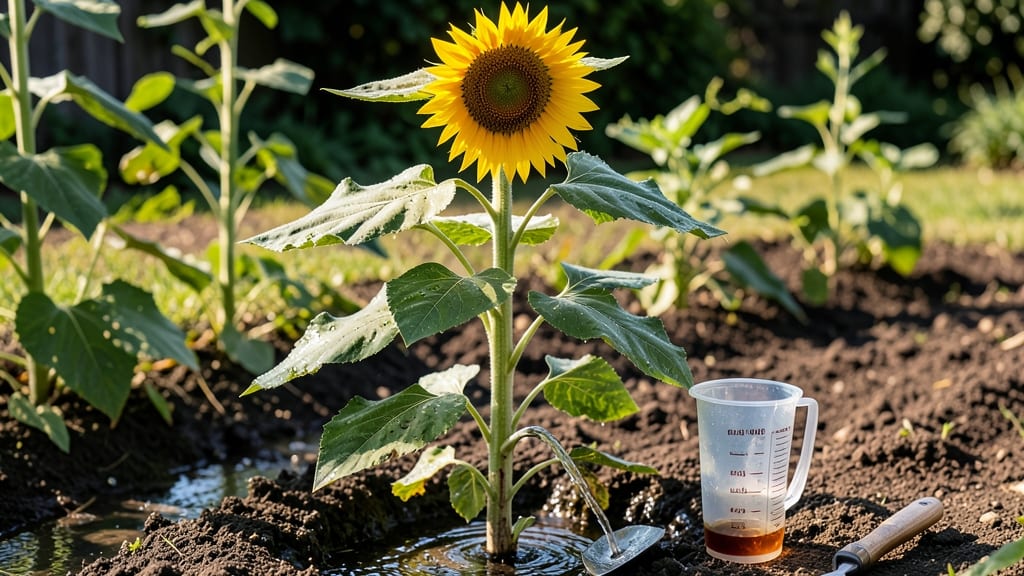
Sunflowers need about 1 to 1.5 inches of water weekly—deep soaks that encourage strong roots, not light sprinkles that dry out the surface.
Here’s the catch: those towering 🌻 beauties look tough, but their thirst changes as they grow. Seedlings need frequent moisture, while mature plants can handle dry spells—if you water right. Too much or too little, and you’ll end up with floppy stems or sad, stunted blooms.
This guide breaks down the perfect watering schedule by season, soil type, and growth stage, so you never guess again. We’ll also cover the telltale signs of over- or underwatering (yes, even sunflowers talk to you if you listen).
By the end, you’ll know exactly when to reach for the hose—or skip it entirely—and keep your sunflowers thriving from April’s first sprouts to October’s golden harvest.
Sunflower watering requirements by growth stage: deep roots demand smart hydration
Sunflowers may look low-maintenance with their towering bright yellow blooms, but their water needs shift dramatically as they grow. Young seedlings require consistent moisture to establish roots, while mature plants develop deep taproots that access water independently.
Understanding these stages helps you avoid overwatering (which causes rot) or underwatering (which stunts growth). Let’s break down the exact watering approach for each phase.
At the seedling stage, sunflowers need daily watering to keep soil evenly moist. Their roots are shallow, so light, frequent watering prevents drying out. Once they reach 4-6 inches tall, you can gradually reduce frequency—but never let the soil dry completely.
This transition marks the start of their vegetative growth, where deeper roots begin forming.
Here’s a clear breakdown of watering needs by growth stage, including how deep roots change irrigation requirements over time:
| Growth Stage | Watering Frequency | Depth | Key Notes |
|---|---|---|---|
| Seedling (0-4 weeks) | Every 1-2 days | 1-2 inches | Keep soil consistently moist; avoid puddles |
| Vegetative (4-8 weeks) | Every 2-3 days | 3-4 inches | Reduce frequency as roots deepen; water deeply |
| Flowering (8-12 weeks) | Every 3-5 days | 4-6 inches | Critical for bud development; avoid wetting flowers |
| Seed Production (12+ weeks) | Every 5-7 days | 6+ inches | Deep roots handle drought; reduce water to prevent rot |
During the vegetative stage, sunflowers develop taproots that can reach 4-6 feet deep. This is when you can start deep watering—soaking the soil to 3-4 inches instead of light surface watering.
I’ve seen gardeners make the mistake of keeping up daily watering, which leads to root suffocation and fungal issues. Instead, focus on slow, deep hydration to encourage strong root growth.
The flowering stage is the most sensitive to water fluctuations. Buds need steady moisture to open fully, but overwatering can cause buds to drop. Aim for 3-5 days between waterings, always in the early morning to reduce fungal risks.
If your soil is sandy or well-draining, you may need to water more frequently, while clay soils hold moisture longer.
Once sunflowers enter seed production, their deep roots make them drought-tolerant. At this point, I often reduce watering to every 5-7 days, unless you’re in an extreme heatwave.
Overwatering now can dilute seed quality and attract pests. Pay attention to the stem’s snap test: if it bends easily, the plant has enough moisture.
Pro tip: Use a soil moisture meter to check depth. Insert it 4 inches deep during vegetative growth and 6+ inches when mature. If the meter reads dry, water thoroughly; if it’s moist, wait another day. This method saves time and prevents guesswork, especially for beginner gardeners.
Mulching with straw or wood chips is another game-changer. It retains soil moisture, regulates temperature, and reduces evaporation. Apply a 2-3 inch layer around the base (but keep it away from the stem to prevent rot).
I’ve seen sunflowers in mulched beds thrive with 30% less water than unmulched plants.
Watch for visual cues like wilting leaves or yellowing at the edges, which signal underwatering. Conversely, mushy stems or leaf spots mean overwatering. Adjust your schedule based on these signs, and don’t forget that climate matters.
In arid regions, you may need to water daily during heatwaves, while humid climates can
Weekly watering schedule for sunflowers: adjusting for climate and soil type
Your sunflowers’ water needs shift dramatically based on where you live and what your soil looks like. In arid climates, like Arizona or Nevada, I water mine every 2-3 days during summer, while in humid regions like the Pacific Northwest, I might stretch it to every 5-7 days.
The key? Matching your schedule to your soil’s moisture retention.
Sandy soil drains like a sieve—water disappears fast, so I check moisture daily and water deeply when the top 1-2 inches feel dry.
Clay soil holds water like a sponge, so I wait until the top 3-4 inches are dry before watering again. Loamy soil (the gardener’s gold) sits right in the middle, needing water when the top 2 inches are dry.
Here’s where it gets tricky: overwatering causes yellowing leaves and root rot, while underwatering leads to droopy stems and cracked soil. Both are silent killers if you’re not paying attention. The good news? Sunflowers are resilient once established—they’ll tell you what they need if you know the signs.
- 🌡️ Arid Climates (e.g., Desert Regions): Water every 2-3 days in summer, every 4-5 days in spring/fall. Use drip irrigation or soaker hoses to avoid evaporation. Mulch heavily (3-4 inches) to retain moisture.
- 🌧️ Humid Climates (e.g., Pacific Northwest): Water every 5-7 days in summer, every 7-10 days in cooler months. Watch for fungal diseases—water at soil level, not overhead, to prevent mildew.
- 🏜️ Sandy Soil: Water daily in peak heat (1-2 inches per week). Use organic matter (compost) to improve retention. Signs of thirst: wilted leaves by noon and soil pulling away from the pot.
- 🏔️ Clay Soil: Water every 5-7 days—clay stays soggy longer. Test moisture by pushing a finger 3-4 inches deep. If it’s damp, wait. If dry, water deeply until it runs out the bottom.
- 🌿 Loamy Soil (Ideal!): Water every 4-6 days in summer. Aim for 1-1.5 inches per week. Loamy soil’s crumbly texture is your best friend—it drains well but holds enough moisture for deep roots.
Pro tip: Always water in the early morning (before 10 AM) to let foliage dry out during the day. This cuts down on pests and diseases while giving roots time to absorb moisture.
I’ve seen sunflowers wilt by afternoon only to perk up by evening—this is normal if the soil’s moist below the surface.
Pay attention to your sunflowers’ leaves. Drooping in the heat? It’s thirsty. Yellowing or crispy edges? Overwatered or salt buildup. And if the stem snaps easily, it’s either underwatered or root-bound. Adjust your schedule based on these clues, not just the calendar.
Once your sunflowers hit 6 feet tall, they’re tougher to kill. Cut back to every 5-7 days in summer, even in dry climates. Their deep roots can access water you’d never guess was there.
But don’t skip watering entirely—flowering and seed production need consistent moisture to avoid blank stems or shrivelled seeds.