
Flowers
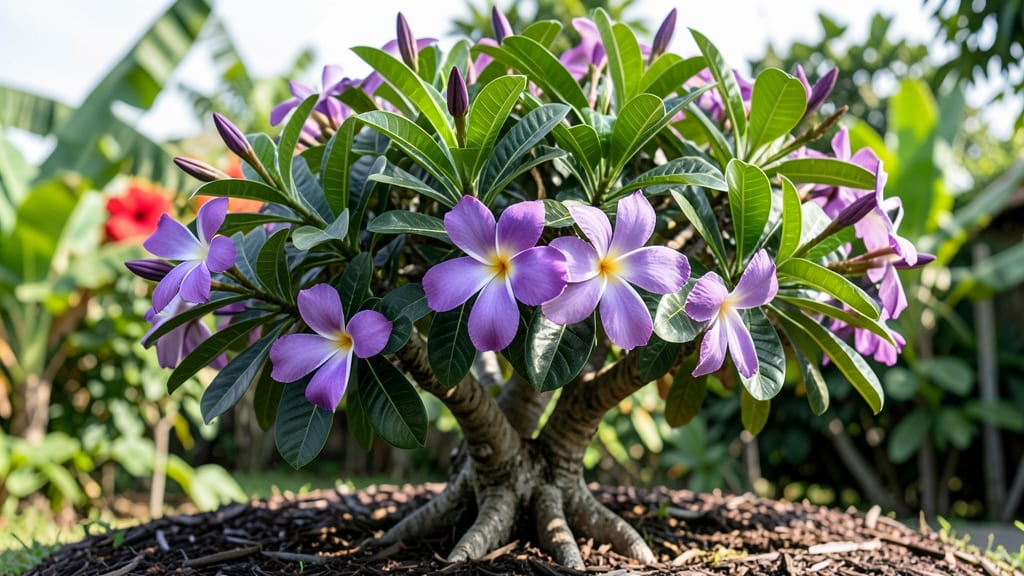
The purple plumeria flower 🌺 is one of the most coveted tropical blooms—its velvety petals and intoxicating fragrance make it a showstopper in any garden.
Picture this: a rare variety thriving in your backyard, its deep magenta blooms drawing hummingbirds and filling the air with sweetness. But here’s the catch—growing these stunning plants isn’t just about luck.
It’s about knowing the exact conditions they crave, from soil to sunlight, and the propagation secrets that turn cuttings into lush, flowering shrubs.
If you’ve ever dreamed of cultivating a plumeria that stands out in General (Tropical/Subtropical) zones 10-12, this guide is your roadmap. We’ll cover everything from selecting the right purple hybrid to troubleshooting common pitfalls—so you can finally enjoy those year-round blooms you’ve been waiting for.
Ready to transform your space into a fragrant paradise? Let’s dive into the care and propagation tips that’ll have your plumeria thriving in no time.
Rare purple plumeria varieties: identification and unique characteristics
If you're dreaming of a garden bursting with vibrant purple plumeria flowers, you're not alone. These stunning varieties are among the most coveted in tropical gardening. The deep magenta hues and intoxicating fragrances make them stand out, but identifying the right variety can be tricky.
Let me break down the most sought-after purple plumeria types so you can choose the perfect one for your climate and garden style.
Purple plumeria varieties often get confused with lavender or pink types, but true purples have distinct coloration and unique growth habits. For example, some varieties lean toward lavender-purple blends, while others boast deep violet-black tones.
Understanding these differences will help you select a plumeria that thrives in your USDA Zone 10-12 conditions or with proper winter protection in cooler areas.
| Variety | Flower Color | Fragrance | Mature Height | Unique Trait |
|---|---|---|---|---|
| Purple Majesty | Deep magenta-purple | Strong, sweet | 6-10 ft | Large blooms, heat-tolerant |
| Royal Purple | Velvet purple | Mild, floral | 8-12 ft | Disease-resistant, long blooming |
| Black Dragon | Deep violet-black | Light, musky | 10-15 ft | Dramatic foliage, slow-growing |
| Lavender Dream | Soft lavender-purple | Subtle, fresh | 4-6 ft | Compact, great for containers |
| Midnight Kiss | Dark purple with white edges | Moderate, sweet | 6-10 ft | Bicolor blooms, cold-hardy |
The 'Purple Majesty' is one of my favorites for its bold magenta-purple blooms and intense fragrance. This variety thrives in full sun and can handle drought conditions once established, making it ideal for low-maintenance gardens.
Its large flowers make it a showstopper in tropical landscapes or as a focal point in containers.
For gardeners in cooler climates, the 'Midnight Kiss' variety is a fantastic choice. Its dark purple blooms with white edges add visual interest, and it's slightly more cold-tolerant than other purple types.
This variety also produces abundant blooms throughout the growing season, rewarding you with color from spring to fall.
If you're looking for something truly unique, the 'Black Dragon' plumeria offers deep violet-black flowers that create a dramatic effect. However, this variety grows slowly and requires extra care to maintain its striking appearance. Its musky fragrance is lighter than other purples, but the visual impact is unmatched.
When selecting a purple plumeria, consider your garden's microclimate. Varieties like 'Royal Purple' thrive in humid, tropical conditions, while others like 'Lavender Dream' adapt well to container gardening in urban settings. Always choose a variety that matches your USDA zone and sunlight availability for the best results.
One key factor to watch for is flower color consistency. Some purple plumeria varieties may fade to pink in direct sunlight, while others maintain their deep hues year-round.
For example, 'Black Dragon' holds its color better in partial shade, whereas 'Purple Majesty' needs full sun to reach its peak color intensity.
Fragrance is another critical consideration. The 'Purple Majesty' and 'Royal Purple' varieties are known for their strong, sweet scents, while the 'Black Dragon' has a more subtle, musky aroma.
If you're planting near seating areas or walkways, choose a variety with a noticeable fragrance to enhance your outdoor experience.
To ensure your purple plumeria thrives, pay attention to its growth habits. Some varieties, like 'Lavender Dream', stay compact and bushy, making them perfect for small gardens or containers.
Others, like 'Black Dragon', can grow tall and leggy, requiring regular pruning to maintain shape and encourage branching.
If you're new to growing plumeria, start with a hardier variety like 'Royal Purple' or 'Midnight Kiss'. These types are more forgiving and easier to care for, making them ideal for beginners.
Once you've gained experience, you can experiment with rarer varieties like 'Black Dragon' for a more challenging and rewarding gardening experience.
Step-by-step propagation guide: how to grow purple plumeria from cuttings
Propagating purple plumeria flowers from cuttings is the fastest way to grow these stunning tropical beauties. Unlike seeds, cuttings preserve the exact color and fragrance of the parent plant, ensuring your new plumeria will be just as breathtaking.
Whether you’re using stem cuttings, air layering, or grafting, timing and technique are everything.
The best time to propagate is during the active growing season, typically late spring to early summer (March–May in frost-free zones).
This gives your cuttings enough warmth and humidity to root before winter dormancy. Purple varieties like 'Royal Purple' or 'Black Dragon' thrive best when propagated this way, but they require extra care to avoid root rot or slow growth.
Step-by-Step Propagation Guide
- Step 1: Select Healthy Cuttings
Choose 4–6 inch stems from mature, disease-free plumeria plants. Use wooden pencils or sharp pruners to make clean cuts just below a leaf node. Allow cuttings to dry for 1–2 hours to form a callus.
- Step 2: Prepare the Rooting Medium
Fill a 6-inch pot with a mix of perlite and coconut coir (50/50 ratio) for fast-draining conditions. Avoid garden soil—it retains too much moisture and causes root rot. Sterilize the mix by baking it at 200°F for 30 minutes.
- Step 3: Plant the Cuttings
Insert each cutting 2 inches deep into the medium, leaving only the top 2–3 leaves exposed. Space cuttings 3 inches apart to prevent overcrowding. Use a misting bottle to dampen the soil lightly—never soak it.
- Step 4: Create a Humid Environment
Cover the pot with a clear plastic bag or humidity dome to trap moisture. Place the setup in a warm, bright spot (75–85°F) with indirect sunlight. Open the bag daily for 5 minutes to prevent mold.
- Step 5: Monitor and Transplant
Check for new growth after 4–6 weeks. Once roots form (gently tug to test), transplant cuttings into individual pots with well-draining potting mix. Harden off for 1 week before moving outdoors.
If you’re grafting, use a T-budding or whip-and-tongue method during the late winter dormant season. Attach a purple plumeria bud to a hardy rootstock like a pink or white plumeria, then secure with rafting tape.
Keep the grafted area moist but not soggy until new growth appears in 6–8 weeks.
Watch for yellowing leaves or mushy stems—signs of overwatering or root rot. Adjust watering to every 7–10 days once established, and always use bottom-watering to avoid fungal issues. With patience, your purple plumeria cuttings will reward you with vibrant blooms in 1–2 years!
Pro tip: Use a rooting hormone (like Clonex) to boost success rates, especially for slow-growing purple varieties. Happy propagating—your tropical paradise awaits! 🌺🌿