
Flowers
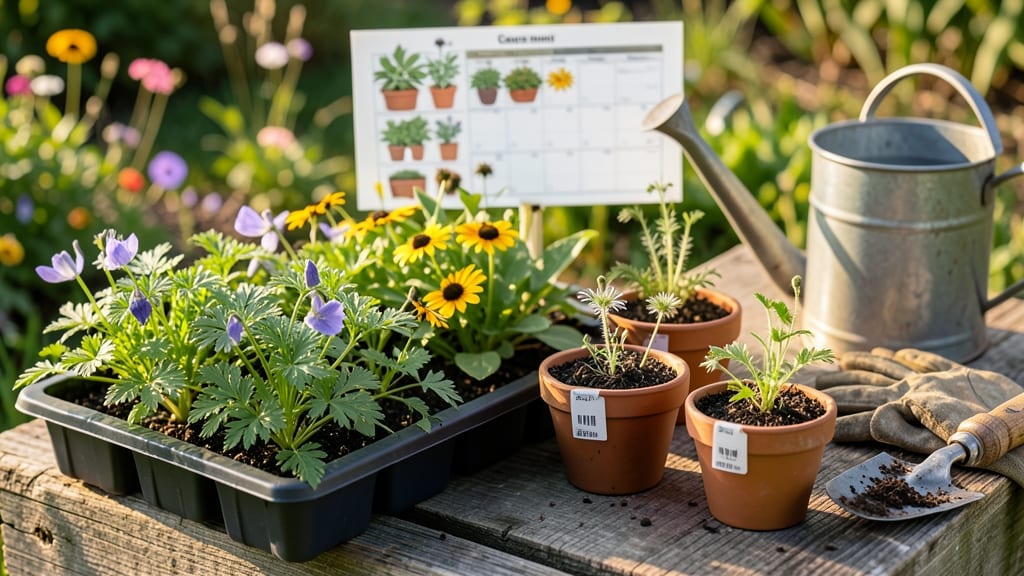
You can plant flowers in Colorado as early as late March in lowland areas or wait until late May in high mountain regions, depending on your elevation and last-frost dates.
Colorado’s diverse elevations—from high mountain valleys to arid plains—create wildly different planting seasons, leaving many gardeners confused about the best time to plant flowers.
Whether you’re in Denver’s USDA Zone 5 or Colorado Springs’ Zone 6, timing matters. Planting too early risks frost damage, while waiting too long shortens the bloom season.
Below, I break down the exact deadlines for your microclimate, plus the best flowers to choose for vibrant blooms all season.
Colorado flower planting deadlines by elevation zone (with frost date maps)
Colorado’s dramatic elevation shifts—from the arid Front Range plains to the Rocky Mountain peaks—mean your last frost date could vary by 6 weeks or more. Planting too early in high-altitude zones risks frost damage, while lowland areas can start 2-3 weeks sooner.
Let’s break down the exact planting windows for your elevation to ensure vibrant, frost-free blooms all season.
Most Colorado gardeners fall into three key elevation bands, each with distinct frost averages and hardiness zones. The lowlands (3,000–5,000 ft)—like Denver and Colorado Springs—typically see their last frost by mid-April, while mountain regions (7,000+ ft) can wait until late May or June.
Even within these zones, microclimates (like urban heat islands or sheltered valleys) can shift deadlines by 1-2 weeks. Use these guidelines as your planting calendar, then adjust based on your local frost history.
Pro Tip: Check the USDA Plant Hardiness Zone Map for your exact location—Colorado spans Zones 4–8. For example, Denver (Zone 5b) has a last frost around April 15, while Aspen (Zone 4a) may not be frost-free until May 20. Always plant perennials and bulbs after your zone’s last frost date, and use row covers to extend early/late seasons by 2–4 weeks.
| Elevation Zone | Avg. Last Frost | Spring Planting Window | Fall Planting Window | Best for Planting |
|---|---|---|---|---|
| Lowland (3,000–5,000 ft) | Mid-April | April 15–May 15 | August 15–September 15 | Annuals (marigolds, zinnias), heat-loving perennials (lavender, Russian sage) |
| Foothills (5,000–7,000 ft) | Late April–Early May | May 1–May 31 | August 1–September 10 | Drought-tolerant perennials (cone flowers, blanket flowers), cool-season bulbs (tulips, daffodils) |
| Mountain (7,000+ ft) | Late May–June 1 | June 1–July 1 | July 15–August 15 | Alpine flowers (columbines, penstemons), hardy bulbs (gladiolus, allium) |
For annual flowers, like marigolds or zinnias, aim to plant 2–4 weeks after your last frost date—these heat-loving plants thrive once soil temps hit 60°F.
In lowland zones, you can even direct-sow warm-season annuals in early April under row covers or in a greenhouse for a jump-start. Meanwhile, perennials and bulbs (like tulips or daffodils) should wait until after the last frost to avoid frost heave or rot.
Bulbs are a special case—plant fall-blooming varieties (like tulips) in late summer (August–September) to establish roots before winter. Spring-blooming bulbs (like daffodils) can go in October–November, but mountain gardeners should wait until early October to avoid early freezes. Pro tip: Use a soil thermometer to confirm 50°F soil temps before planting—this ensures consistent germination across elevations.
Fall planting is just as critical as spring. In lowland zones, you can plant cool-season annuals (like pansies or snapdragons) as early as mid-August, while mountain regions should wait until late July to avoid unpredictable frost. Perennials planted in fall have more time to root before winter, giving them a head start in spring. Always water deeply after planting and mulch to protect roots from temperature swings.
Common mistakes to avoid: Planting tender annuals (like petunias) before the last frost, or skipping soil prep in high-altitude areas where thin air slows germination. Test your soil’s pH (Colorado’s alkaline soil often needs amendments) and add compost to improve water retention—critical for drought-prone foothills. If you’re unsure about your exact frost date, check the Colorado Climate Center’s frost maps or use a local Cooperative Extension office for hyper-local advice.
Extend your season with row covers, cold frames, or greenhouses. These tools can push spring plantings 2–4 weeks earlier or delay fall plantings by 3 weeks. For example, Denver gardeners using row covers might plant cool-season crops in early April, while Aspen gardeners could start mountain-friendly flowers in late May under protection. Always remove covers during the day to prevent overheating—especially in sunny lowland zones.
Finally, track your own frost dates for 2
How microclimates in Colorado affect flower planting (and how to adjust)
Colorado’s microclimates can shift planting deadlines by 3–4 weeks depending on your location. A south-facing slope in Denver might warm up enough for marigolds by mid-April, while a north-facing yard in Leadville could still see frost in early June.
These differences aren’t just about elevation—they’re shaped by urban heat islands, wind exposure, and even nearby water bodies.
If you’ve ever planted petunias too early in your backyard only to watch them wilt from a late frost, you’re not alone. The key is understanding how your specific microclimate behaves. Start by observing your garden’s sun exposure patterns and wind direction.
A simple soil thermometer ($10–$15 at garden centers) will tell you when the ground is ready for seeds—50°F or warmer for most flowers.
- 1 Use soil thermometers—not air temps—to gauge planting readiness. 50°F soil signals safe germination for most flowers.
- 2 Extend spring planting by 2–3 weeks with row covers or cold frames. Remove covers when flowers show true leaves to avoid overheating.
- 3 Adjust for wind exposure: Sheltered areas (like south-facing walls) can plant 2 weeks earlier than exposed spots. Use windbreaks for delicate flowers like delphiniums.
- 4 Fall planting? North-facing slopes stay cooler longer—ideal for cool-season flowers like pansies or snapdragons. Plant 4–6 weeks before first frost for best results.
- 5 Urban heat islands (like Denver’s downtown) can be 5–10°F warmer than suburbs. Plant heat-loving flowers like lantana or zinnia 1–2 weeks earlier in these zones.
I’ve also noticed that aspect matters—a south-facing garden in Colorado Springs might be ready for geraniums by late April, while a north-facing garden in the same neighborhood could wait until early May.
Use a sun tracker app (like Sun Surveyor) to map your garden’s light patterns for a full year. This helps pinpoint the best spots for sun-loving flowers like black-eyed Susans versus shade-tolerant varieties like columbines.
For high-elevation gardeners (7,000+ ft), consider hardening off seedlings indoors with a grow light until mid-June.
Start seeds 6–8 weeks early in a sunny window or under lights to give them a head start. Alpine flowers like edelweiss or globe thistle thrive in these conditions but need well-draining soil to avoid rot.
Pro tip: If you’re unsure about your microclimate, try the “frost clock” method. Plant a few fast-growing annuals (like radishes) in early April—if they survive without damage, your area is likely frost-free for heat-sensitive flowers like tomatoes or marigolds. Adjust your schedule based on their success!
Remember, Colorado’s fall planting window is just as critical as spring. Cool-season flowers like calendulas and stock can be planted as late as early September in lower elevations, while high-altitude gardens might push it to mid-September. Mulch heavily to protect roots from early frost.