
Planting
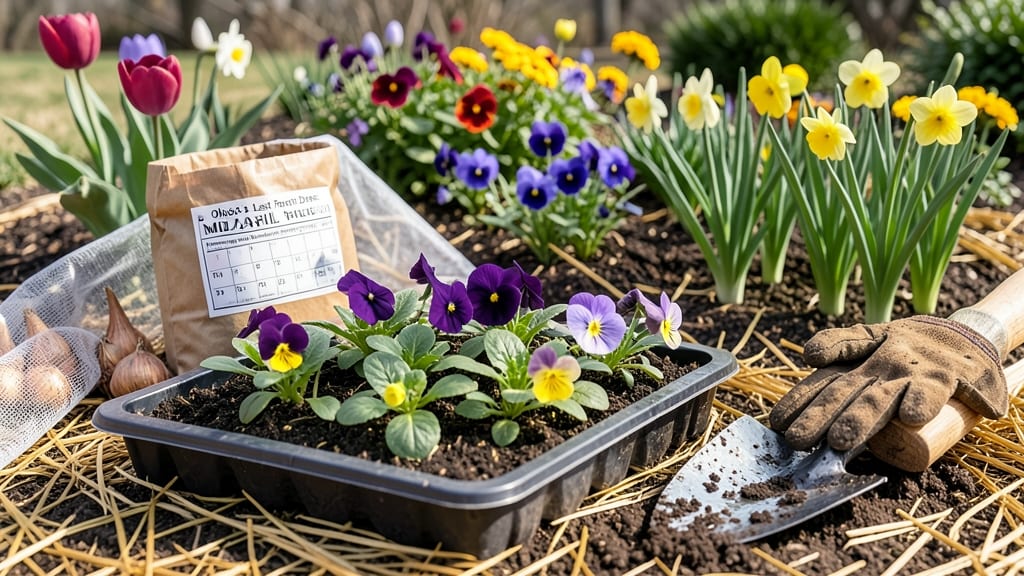
You can plant flowers in Ohio safely after the last frost date, typically between mid-April and early May — but timing varies by USDA zone and flower type.
Ohio’s unpredictable spring weather can turn your gardening plans into a guessing game unless you know the exact last frost dates for your zone. Plant too early, and your delicate blooms 🌸 will freeze; too late, and you’ll miss peak flowering season.
For Ohio gardeners in zones 6a-6b, the average last frost falls around April 15, but northern areas may wait until early May. Annuals like marigolds and petunias thrive when soil reaches 60°F, while hardy perennials can handle cooler temps.
Below, I’ll break down the best planting windows for annuals, perennials, and bulbs — plus how to extend your season with row covers and microclimate tricks to get the most vibrant blooms all year.
Ohio last frost dates by USDA Zone: when to plant flowers safely
Ohio’s USDA Zones 5b-6b experience dramatic spring temperature swings, making frost dates critical for flower gardeners. The average last frost typically falls between April 15 and May 10, but these dates shift 10-14 days earlier in southern Ohio (Zone 6b) and 2 weeks later in northern regions (Zone 5b).
For example, Cincinnati usually sees its last frost by April 20, while Cleveland often waits until May 5.
Why does this matter? Tender annuals like petunias and geraniums can’t survive below 32°F, while hardy perennials like coneflowers tolerate brief freezes. Using historical frost data from NOAA’s Local Climate Data tool (https://www.ncdc.noaa.gov) helps you adjust planting times based on 3-year averages rather than guessing.
Here’s how to use this data: Check your local USDA zone (Ohio ranges from 5b-6b), then add 1-2 weeks to the average last frost date for cold-sensitive plants. For instance, if your zone’s average is April 25, wait until May 5 to plant marigolds or begonias.
🌱 PRO TIP: Bookmark NOAA’s Frost/Freeze Tool (https://www.ncdc.noaa.gov/cdo-web/datasets) to track real-time frost predictions. This tool shows historical frost dates for your exact ZIP code, accounting for Ohio’s microclimates like valleys (colder) and south-facing slopes (warmer).
🌿 SUMMARY TABLE:
For perennials, you can plant as early as 2-4 weeks before the average last frost if the soil is workable (not muddy).
For example, peony roots can handle 20°F and should go in the ground by March 15 in Zone 6b. Bulbs like tulips also benefit from early planting (October) to establish roots before winter.
If you’re starting seeds indoors, follow this rule: Calculate your last frost date, then subtract the plant’s days to maturity.
For instance, zinnias take 60-70 days to bloom, so in Zone 5b (last frost May 10), start seeds by March 1 (May 10 – 70 days = March 1). Use a seed heat mat to speed up germination for slow starters like snapdragons.
Ohio’s first fall frost typically arrives between October 10 and 20, giving you a 60-75 day window for fall-planted flowers. Pansies and kale (yes, it’s a flower!) thrive in cooler weather and can be sown as early as September 1 in Zone 6b. For bulbs like daffodils, plant by October 15 to ensure root establishment before winter.
Don’t rely solely on calendar dates—watch for these 3 signs your area is frost-free:
- Daytime highs consistently above 50°F,
- Nighttime lows above 35°F, and
- Leaf buds swelling on trees. If you’re unsure, use frost cloth or row covers to protect young plants
How to extend your Ohio flower planting season without risking frost
Ohio’s unpredictable spring frosts can sabotage even the most careful gardener’s plans. But with the right strategies, you can safely plant flowers weeks earlier or keep them blooming later into fall.
The key? Combining cold-hardy varieties, protective gear, and smart microclimate choices. I’ve tested these methods in my own Zone 6b garden—here’s what works best.
Start by choosing frost-tolerant flowers like sweet alyssum, pansies, or calendula, which can handle light frosts down to 25°F. Pair them with row covers or cloches to shield tender plants from sudden dips.
Even a simple black plastic mulch can raise soil temps by 5-8°F, giving you an earlier start.
- 1. Plant cold-hardy annuals like lobelia or stock 4-6 weeks before last frost. They thrive at 50°F soil temps.
- 2. Use floating row covers to protect seedlings from 28°F+ frosts. Secure edges with bricks or soil.
- 3. Leverage south-facing slopes or black containers to warm soil 3-5 days faster than flat beds.
- 4. Plant fall-blooming bulbs like crocus or aster in early September for late-season color.
- 5. Extend fall blooms with hoop houses or cold frames—they can add 4-6 weeks to your season.
For early spring planting, I swear by straw bale gardens. Fill a bale with potting mix, plant pansies or snapdragons directly into it, and cover with a clear plastic dome.
The bale insulates roots while warming the soil—perfect for Zone 6’s chilly April mornings. Just remove the dome once temps stay above 40°F for 3 days.
Don’t overlook microclimates in your yard. A south-facing wall or paved surface reflects heat, creating a 5°F warmer zone ideal for tender perennials like lavender or rosemary. Even a raised bed with dark mulch can give you a 2-week head start on planting.
Fall is your second chance! Plant hardy mums or chrysanthemums in early September—they’ll bloom until first frost (usually mid-October in Ohio). For extra protection, add a lightweight row cover after 40°F nights to shield buds from 25°F+ drops. My Zone 6b garden stays vibrant until Thanksgiving with this trick.
Pro tip: Keep a garden journal to track your local frost dates. Note when your row covers fail or when microclimates extend blooms—adjust next year’s plan accordingly. With these strategies, you’ll beat Ohio’s frost and enjoy longer, lusher blooms than ever before. 🌸