
Flowers
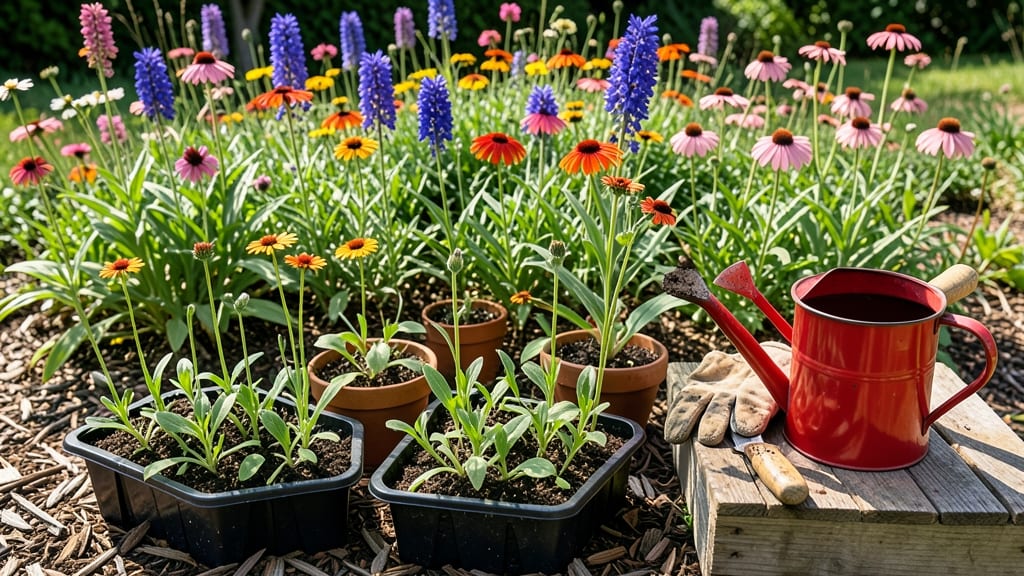
To plant flowers in Utah, timing depends on your elevation—spring starts as early as February in St. George but waits until May in Park City to avoid late frosts.
Utah’s dramatic elevation shifts—from desert lowlands to alpine peaks—mean your flower planting timeline can vary by hundreds of days. Get the exact microclimate-specific deadlines to avoid frost traps and maximize blooms, whether you’re gardening in St. George, Salt Lake City, or Park City.
Most Utah gardeners follow the USDA 5-8 zones, but local frost patterns twist those rules. Lowland areas like Cedar City can plant marigolds in March, while high-desert towns near Moab wait until April for the same variety to thrive.
Below, I break down the best planting windows by elevation, frost-resistant flower picks, and how to adjust for Utah’s unpredictable weather—so you can finally get those 🌸 blooms without the guesswork.
Utah flower planting deadlines by elevation zone (with frost risk maps)
Utah’s three distinct elevation zones create wildly different planting windows—what’s perfect for St. George’s desert heat (2,000–5,000 ft) can freeze in Park City’s alpine valleys (8,000+ ft). Understanding these zones helps you avoid late-spring frosts that can wipe out tender seedlings overnight.
Below, I’ve broken down the critical planting deadlines for each zone, including frost risk adjustments and hardiness zone overlaps.
The key to Utah gardening? Microclimates matter more than USDA zones. While most of Utah falls in USDA Zones 5–8, cold air pooling in valleys can drop temperatures 10°F colder than ridge tops just a mile away.
Always check your exact elevation and local frost data—Utah’s last frost dates can vary by 6 weeks between lowland and highland gardens.
Pro Tip: Use row covers or cold frames to extend your planting window by 2–4 weeks in unpredictable zones like Salt Lake Valley (4,200 ft). These tools let you plant heat-loving annuals like marigolds or zinnias as early as mid-March in sheltered microclimates.
| Elevation Zone | Avg. Last Frost | Spring Planting Window | Fall Planting Window | Frost Risk Notes |
|---|---|---|---|---|
| Low (2,000–5,000 ft) | Feb 15–Mar 15 | Mar 1–Apr 15 (annuals) Apr 1–May 1 (perennials) |
Aug 15–Sep 30 | Cold air sinks; valleys freeze 10°F colder than ridges. Use row covers in March. |
| Mid (5,000–8,000 ft) | Apr 1–May 1 | Apr 15–May 15 (annuals) May 1–Jun 1 (perennials) |
Jul 15–Aug 30 | Unpredictable late frosts; monitor high-elevation frost alerts. Wait for consistent 50°F nights. |
| High (8,000+ ft) | May 15–Jun 1 | Jun 1–Jul 1 (hardy perennials only) Jul 15 (annuals, if sheltered) |
Aug 1–Sep 15 | Short season; prioritize cold-hardy flowers like Blackfoot Daisy or Alpine Penstemon. Frost can occur anytime after July. |
For low-elevation gardens (like St. George or Hurricane), start heat-loving annuals indoors by February 1 to transplant after the February 15 average last frost. Marigolds, sunflowers, and lantana thrive here but need consistent moisture during Utah’s dry spring winds.
In mid-elevation zones (e.g., Salt Lake City), wait until April 15 for most flowers—petunias and geraniums often survive light frosts but may need protective covers.
High-elevation gardeners face the toughest timeline. Above 8,000 feet (think Park City or Ogden), only cold-hardy perennials like columbines or snow-in-summer reliably bloom. Annuals like pansies can be planted as late as July 1 for fall color, but frost can strike anytime after August 15.
Use black plastic mulch to warm soil and extend the season by 2–3 weeks.
Utah’s first frost dates also vary wildly: St. George averages November 15, while Ogden can see frost as early as September 30.
For fall planting, aim to get cool-season crops (like pansies or calendulas) in the ground by August 1 in low zones or July 15 in high zones. These flowers tolerate light frosts and often rebloom in spring.
One critical mistake Utah gardeners make? Ignoring local frost pockets. Even in Zone 7 Salt Lake City, the Jordan Valley can experience frost 2 weeks later than nearby hills.
Use frost-free date maps from the Utah Climate Center and adjust your planting by 1–2 weeks if your yard sits in a cold sink. For example, Murray (4,300 ft) often has a later last frost than nearby Draper due to urban heat islands.
To maximize blooms, pair your planting timeline with soil prep
Best flowers to plant in Utah’s 4 microclimates (heat-tolerant vs. cold-hardy picks)
Utah’s four distinct microclimates—desert lowlands, piedmont valleys, mountain foothills, and alpine zones—demand very different flower choices. What thrives in St. George’s 110°F summers will wilt in Park City’s 30°F nights, and vice versa.
Below, I’ve curated heat-tolerant and cold-hardy flowers for each zone, so you can pick winners for your elevation.
For desert lowlands (2,000–5,000 ft), prioritize drought-resistant annuals like Blackfoot Daisy and Desert Marigold, which handle 100°F+ temps with ease. In mountain zones (8,000+ ft), Alpine Penstemon and Rocky Mountain Columbine flourish where frost lingers until June.
Here’s the pros-cons breakdown for Utah’s top flower picks by microclimate, so you can avoid costly mistakes like planting heat-lovers in the mountains or cold-hardy blooms in the desert.
🌵 Desert Lowlands (2,000–5,000 ft)
- Drought-proof: Needs no extra water once established
- Heat-tolerant: Thrives in 100°F+ with full sun
- Pollinator magnet: Attracts bees & hummingbirds year-round
- Poor cold tolerance: Dies below 20°F
- Aggressive spreaders: Can overtake small gardens
- Short-lived: Most are annuals, not perennials
❄️ Alpine Zones (8,000+ ft)
- Cold-hardy: Survives -20°F winters
- Low-maintenance: Thrives in rocky, poor soil
- Long bloom season: Flowers from June–September
- Slow growth: Takes 2+ years to mature
- Heat-sensitive: Wilts above 80°F
- Short season: Dormant 9 months/year
In piedmont valleys (5,000–7,000 ft), where hot days meet cool nights, Russian Sage and Bee Balm shine—they tolerate 50°F lows but bloom nonstop in 90°F heat. Meanwhile, mountain foothills (7,000–8,000 ft) favor Yarrow and Lavender, which handle 40°F nights while resisting deer grazing.
Pro tip: Always check your exact elevation—a 1,000-ft difference can mean 30 days earlier planting. For example, Blackfoot Daisy thrives at 7,000+ ft but wilts below 5,000 ft due to heat stress. Use your USDA zone map and local frost data to fine-tune your picks.
Need a quick cheat sheet? Bookmark this: Lowland = heat lovers, Highland = cold warriors, and mid-elevation = the flexible middle. Now go pick your perfect blooms!