
Planting
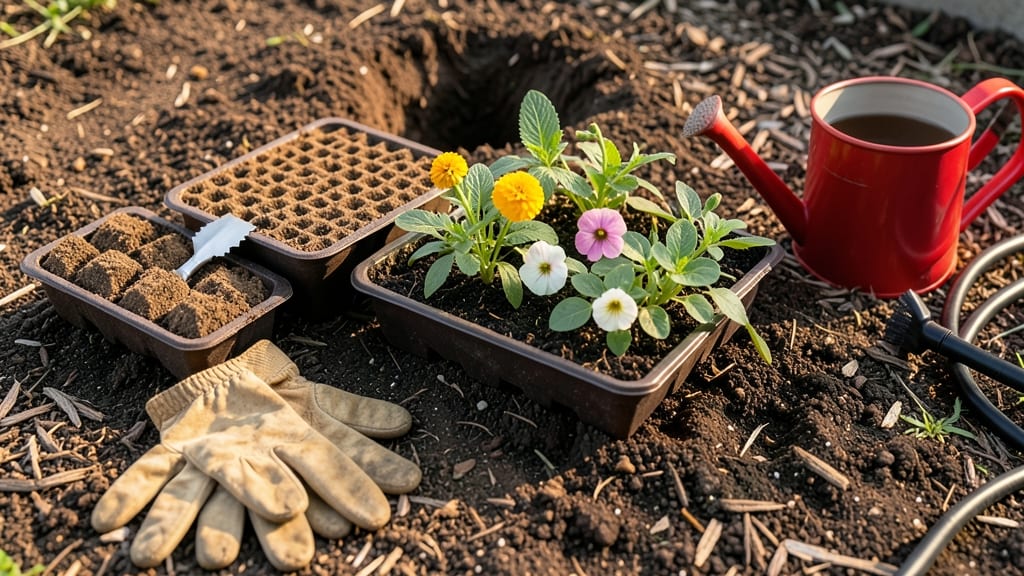
Transplanting flower seedlings at the right time ensures they thrive in your garden 🌸—and skipping this step can leave you with stunted or struggling plants.
If you’ve ever watched your delicate seedlings wilt after moving them too soon, you know how quickly things can go wrong. The key is balancing soil warmth, leaf development, and weather conditions to give your plants the best possible start.
Most flower seedlings need soil temperatures of at least 60°F and 2-4 true leaves before transplanting, but the exact timing depends on your climate zone and flower type.
In this guide, I’ll walk you through how to check soil temperature, spot the perfect leaf count, and avoid common mistakes that lead to transplant shock.


Soil temperature thresholds for safe flower seedling transplanting
Transplanting flower seedlings too early can shock their delicate roots, while waiting too long risks stunted growth or even death. The soil temperature is the most critical factor—it determines whether your seedlings will thrive or struggle after moving outdoors.
Unlike air temperature, which fluctuates daily, soil warmth provides a stable indicator of readiness. For most flowers, the difference between success and failure often comes down to a 5-10°F range in soil conditions.
Cool-season flowers like pansies or snapdragons can handle surprisingly chilly soil, while warm-season beauties such as marigolds or petunias demand much higher temperatures. Even within these categories, microclimates—like shaded beds versus sunny patches—can shift ideal transplant windows by 1-2 weeks.
Without testing, it’s easy to misjudge, so let’s break down the exact thresholds and testing methods you need to know.
| Flower Type | Minimum Soil Temp (°F/°C) | Transplant Window | Frost Sensitivity | Testing Method |
|---|---|---|---|---|
| Cool-season (e.g., pansies, snapdragons) | 45-50°F (7-10°C) | After last frost, when soil warms | High | Use soil thermometer at 2-inch depth |
| Warm-season (e.g., marigolds, petunias) | 60-65°F (15-18°C) | After all frost risk passes | Low | Check 4-inch depth for consistency |
| Tender perennials (e.g., geraniums, salvia) | 55-60°F (13-16°C) | When night temps stay above 50°F (10°C) | Moderate | Test at 3-inch depth in morning |
Testing soil temperature accurately is simpler than you might think. A soil thermometer (available for under $10) is your best tool—insert it 2-4 inches deep, depending on the flower type, and wait 30 seconds for an accurate reading.
Avoid testing after rain or in direct sunlight, as these conditions can skew results by 5-10°F. Morning is ideal because soil retains overnight warmth, giving you a stable baseline.
If you don’t have a thermometer, use the "back of the hand" test: press your palm into the soil; if it feels cool but not freezing, it’s likely in the safe range for cool-season flowers.
Frost risk is another silent killer of young transplants. Even if your air temperature is above freezing, soil can stay dangerously cold for days. Cool-season flowers like calendula or stock can tolerate light frosts, but their roots need consistent warmth to establish.
Warm-season flowers, however, will suffer leaf scorch or dieback if transplanted before the soil hits 60°F (15°C). Use your local frost-free date as a starting point, then add 2-3 weeks to account for soil warming delays in heavy or clay soils.
Regional climate plays a huge role in transplant timing. In Zone 5-6, where frosts linger into May, cool-season flowers can often go in as early as late April, while warm-season types may not be safe until June.
Meanwhile, in Zone 8-10, warm-season flowers might be ready by March, but you’ll still need to monitor soil temps closely—especially in shaded areas where warmth lingers longer.
Pro tip: Mulch your beds with straw or shredded leaves 1-2 weeks before transplanting to help soil warm up faster and retain moisture.
One common mistake is assuming that "warmer air" means "warmer soil." Shade from trees or buildings can create microclimates where soil stays 10°F cooler than in full sun. Test multiple spots in your garden—especially where you plan to transplant—and adjust your schedule accordingly.
For example, a north-facing bed might need 1-2 extra weeks of waiting compared to a sunny south patch. Pay attention to how long your soil stays above the threshold; fluctuations of more than 5°F in a day can stress seedlings, even if the average is safe.
Hardening off your seedlings (acclimating them to outdoor conditions over 7-10 days) is essential, but it doesn’t replace proper soil temperature checks. Even the hardiest seedlings will struggle if the roots can’t absorb water or nutrients efficiently in cold soil.
Start hardening off when your seedlings have 2-4 true leaves, but hold off on full transplanting until the soil meets the temperature requirements for your flower type. This two-step process gives your plants the best chance to establish roots quickly and avoid transplant shock.
If you’re in doubt about whether to transplant, err on the side of waiting. Seedlings can survive a few extra days in pots, but once they’re in the ground, their root systems are vulnerable.
Keep a garden journal to track soil temps and transplant dates—over time, you’ll spot patterns in how your specific microclimate behaves. For example, you might notice that your soil hits 60°F (
Leaf count and hardiness stages: when seedlings are ready
Knowing when your flower seedlings are ready for transplanting isn’t just about guessing—it’s about checking their leaf development and root health. Too soon, and you risk shocking delicate roots; too late, and they may outgrow their containers, becoming root-bound.
The key is watching for true leaves (not the first tiny cotyledons) and signs of root congestion.
Most flower seedlings need between 2-4 true leaves before transplanting, but this varies by plant type. Delicate annuals like impatiens or geraniums often need more leaves (4-6) to handle stress, while hardier perennials like lavender or salvia can tolerate transplanting earlier.
Always prioritize leaf color and stem strength—healthy seedlings have vibrant leaves and sturdy stems.
Here’s how to assess your seedlings’ readiness with confidence:
Seedlings must have 2-4 true leaves (not cotyledons) before transplanting.
Gently squeeze the root ball—if roots spiral tightly, it’s time to transplant.
Delicate flowers (e.g., impatiens) need 4+ leaves; hardy perennials (e.g., lavender) can handle earlier transplanting.
For warm-season flowers like marigolds or petunias, wait until they’ve developed at least 4 true leaves and the soil is consistently above 60°F. These plants are more resilient but still benefit from a slightly larger root system.
Meanwhile, cool-season flowers like pansies or snapdragons can often handle transplanting with just 2-3 true leaves, as long as frost risk has passed.
Don’t forget to check for root congestion—if roots are circling the bottom of the pot or growing out of drainage holes, your seedlings are ready. Gently loosen the root ball before transplanting to encourage outward growth. This step reduces transplant shock by minimizing root damage during the move.
If your seedlings have yellowing leaves or stunted growth despite meeting leaf count requirements, they may still be too young. In this case, give them another week of indoor care under grow lights or in a sunny window.
Patience here pays off—healthy roots and leaves mean stronger plants that bloom faster and last longer in your garden.
Once you’ve confirmed your seedlings are ready, choose a cloudy day or transplant in the early morning to reduce stress. Water thoroughly before and after moving them to help the soil settle around the roots. With these steps, your flower seedlings will transition smoothly from containers to garden beds.