
Planting
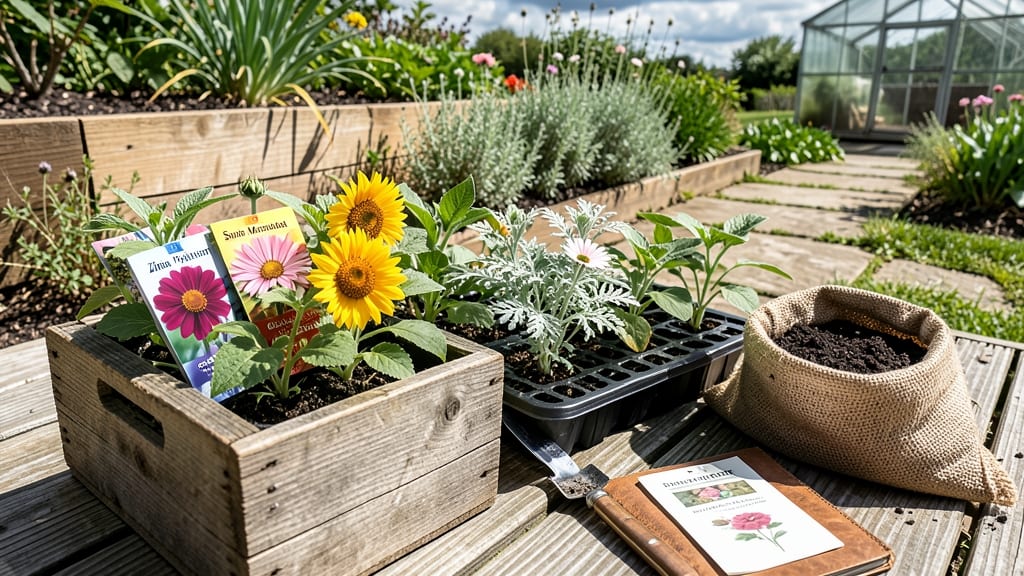
Planting cut flower seeds at the right time ensures your garden bursts with vibrant blooms 🌸—miss the frost-free window, and your hard work could wilt before it even begins.
Timing matters more than you might think. A late frost can turn your seedlings into sad, stunted plants, while planting too early in warm zones risks bolting—flowers shooting up stems before they even open. The key is knowing your last frost date and adjusting for your local climate.
In cooler zones like 6a, start seeds indoors 6-8 weeks before your last frost (typically March or April). For warm-season flowers, wait until soil temperatures hit 60°F—usually late April or May—so the seeds don’t rot in cold soil.
Below, I’ll break down exact planting deadlines by zone, how to extend your harvest with succession planting, and the 3 biggest mistakes that kill cut flowers before they bloom.
Cut flower seed planting deadlines by USDA hardiness zones
Timing your cut flower seeds correctly means the difference between a bountiful bouquet harvest and wasted effort. Each USDA hardiness zone has unique last frost dates, and coastal areas often experience warmer microclimates than inland regions.
For example, Zinnia seeds in Zone 5 need to go in 2-3 weeks after your average last frost, while cosmos seeds in Zone 10 can be sown year-round with proper care.
Understanding these frost-free windows helps you avoid late spring freezes that can kill tender seedlings. I’ve grown sunflowers in Zone 7 for years, and I’ve learned that planting too early—even just 1-2 weeks before the safe date—can stunt growth.
Let’s break down the optimal planting deadlines by zone, including adjustments for coastal vs. inland climates.
🌱⚠️ IMPORTANT: Always check your local frost dates using tools like the National Weather Service or Almanac’s Frost Calculator. These dates can shift by 1-2 weeks depending on elevation and urban heat islands.
| USDA Zone | Last Frost Date (Avg) | Direct Sow Deadline (Inland) | Direct Sow Deadline (Coastal) | Indoor Start (For Transplant) | Best Cut Flowers |
|---|---|---|---|---|---|
| Zones 3-4 | May 1-15 | May 15-30 | April 15-30 (cooler coastal) | March 15-April 1 | Sunflowers, Zinnias, Snapdragons |
| Zones 5-6 | April 15-May 1 | April 30-May 15 | April 1-15 (milder coastal) | March 1-April 15 | Cosmos, Marigolds, Dahlias |
| Zones 7-8 | March 15-April 1 | March 30-April 15 | March 1-15 (coastal) | February 15-March 1 | Rudbeckia, Black-Eyed Susans, Nasturtiums |
| Zones 9-10 | January 15-February 1 | February 15-March 1 | Year-round (succession plant) | January-February | Lisianthus, Celosia, Amaranth |
In cooler zones (3-6), focus on warm-season flowers like zinnias and sunflowers, which thrive in long, hot summers. I’ve found that succession planting every 2-3 weeks after the first deadline extends your harvest by 4-6 weeks.
For example, in Zone 5, planting cosmos seeds on May 1, May 15, and June 1 ensures continuous blooms through frost.
For coastal gardeners, adjust your timeline 1-2 weeks earlier than inland zones. The Pacific Northwest and Gulf Coast often have milder winters, allowing earlier sowing.
In Zone 8’s coastal areas, I’ve sown marigolds as early as February without frost damage. Always monitor soil temperatures—seeds need 60°F+ to germinate consistently.
If you’re in Zone 9 or 10, you’re in luck! Many annual cut flowers can be planted year-round with succession sowing every 4-6 weeks. My lisianthus plants in Southern California bloom nonstop when I plant new batches every month.
Just watch for summer heat stress—provide afternoon shade for delicate varieties like celosia.
How to calculate your local frost-free window for cut flowers
Your local frost-free window is the golden timeframe for planting cut flower seeds—too early, and frost zaps your seedlings; too late, and you miss the harvest season. To pinpoint your exact window, start with historical frost data from your USDA zone, then adjust for your microclimate.
For example, urban areas often stay 5-10°F warmer than rural zones due to heat islands, while valleys frost earlier than nearby hills.
Begin by checking the average last frost date for your zone (e.g., April 15 in Zone 6a). Then, add 4-6 weeks to this date for cool-season flowers like snapdragons or 2-3 weeks for warm-season varieties like zinnias.
Seed packets often list days-to-germination—use this to back-calculate your planting deadline. For instance, if your zinnia seeds take 7-10 days to sprout, plant them 3 weeks before your last frost to avoid cold snaps.
⚠️ callout warning ⚠️
❄️ Don’t Plant Too Early!
Cold soil (below 50°F) stalls germination. Test soil temp with a soil thermometer—wait until it hits 60°F+ for warm-season flowers like sunflowers. In Zone 5b, this could mean delaying planting from April 1 to May 1, even if your last frost is April 15.
✅ Pro Tip: Use row covers or a mini greenhouse to extend your window by 2-3 weeks in early spring.
Next, account for microclimate factors that can shift your frost-free window by 1-3 weeks. A south-facing slope warms faster than a north-facing yard, while low-lying areas frost earlier. Observe your garden’s patterns: Do nearby trees or buildings create cold air pockets?
If so, plant heat-loving flowers like cosmos in warmer microclimates (e.g., near a brick wall) and cool-loving flowers like lisianthus in shadier spots.
For succession planting, divide your frost-free window into 3 planting batches. For example, in Zone 7a (last frost: March 15), plant:
- Batch 1: Cool-season flowers (e.g., calendula) Feb 15
- Batch 2: Warm-season flowers (e.g., zinnias) April 1
- Batch 3: Heat-tolerant flowers (e.g., celosia) May 15
Finally, cross-reference your calculations with seed packet instructions. Some varieties (like snapdragons) need 6-8 weeks indoors before transplanting, while others (like marigolds) thrive with direct sowing 2 weeks after your last frost.
Pro tip: Use a planting calendar app (like Gardenate) to input your zip code and get hyper-local deadlines.
With these steps, you’ll transform guesswork into a precision planting plan—guaranteeing your cut flowers bloom on schedule, every season. Happy gardening! 🌷